

Hi! Thanks for reading this newsletter. A click of the ♡ button makes a difference. You can also share excerpts on social media, forward it to someone who might enjoy the vibes, or text it to a friend.
Reader,
Over the weekend, I went to Nairobi to visit a friend. I took that time to have a book chat with some friends (it ended up being a museum jaunt sans book chat and a good time was had) then a trip to the show at Munyu (details in the events section below) and it was quite the experience.
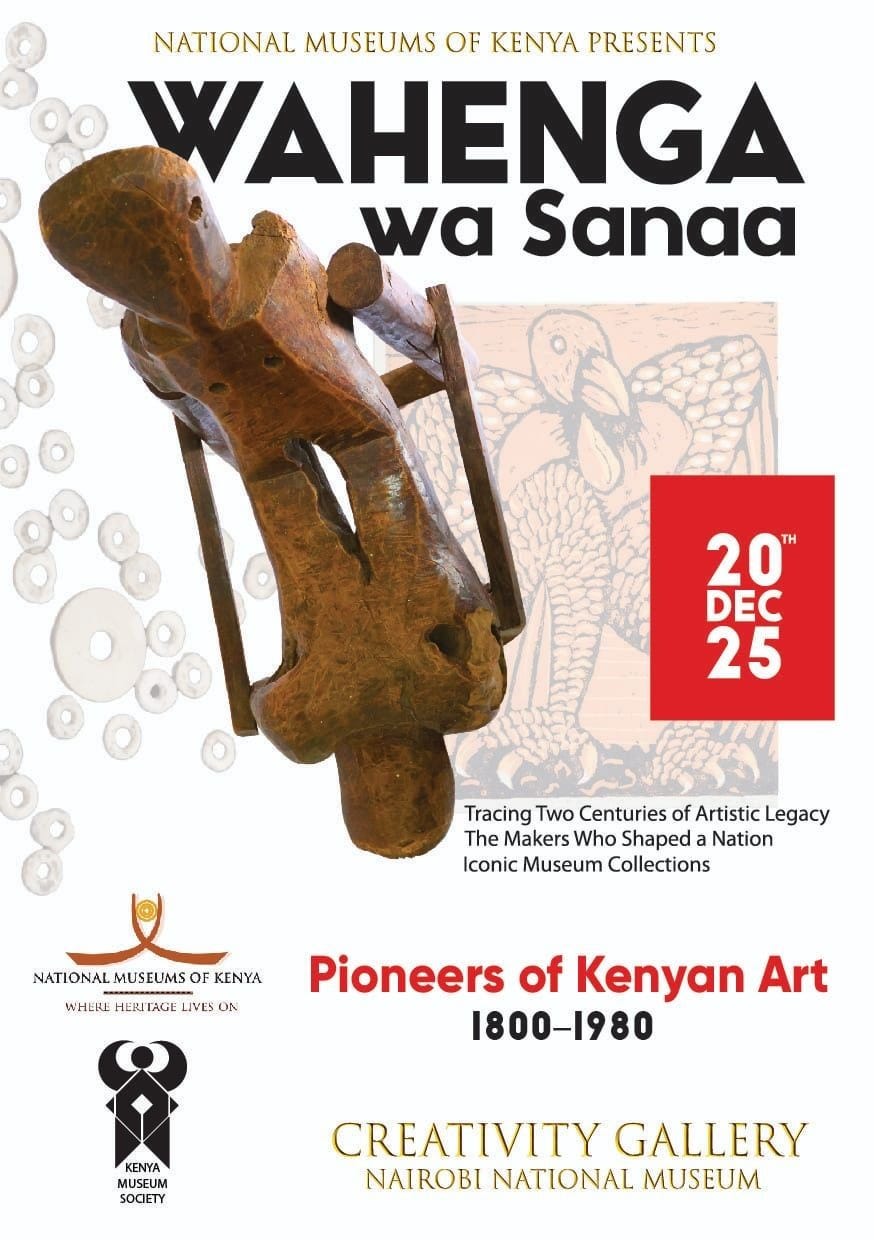
First off: the museum. You know Wahenga wa Sanaa (poster below) has my heart and it was a pleasure to be introduced to the art of Gavin Kendo (his exhibition, Not All Who Wander are Lost, is up till 31st October at the National Museum’s Creativity Gallery) by my friend as we walked about. We also saw Secrets of the Mara, an exhibition on the Mara River ecosystem that’s always an interesting experience. I recommend them all for both the items of display and the ideas they explore. There was also a display of kiondos and their place in Kikuyu culture but it looked too slapdash for me to recommend (sorry!).
While we were at the Mara exhibit, I met 3 generations of a family - mother, daughter, and granddaughter - and it was such a joy to see a family with a small child in the museum (we encountered 2 or 3 more such families in other sections) because children at the museum are often part of school groups. Maybe because it’s tough to wrangle children (and the groups are generally large), I don’t often encounter children really spending time with exhibits so there’s a stark difference between the experience of a child with family and that of one with a school group.
It might also be that there’s some selection bias (I’m a millennial, I concede that I may be using it wrong here) happening: the sort of child whose family visits the museum has a certain experience for being the sort of child whose family visits the museum, even if they visit it with their schoolmates. I don’t know how much can be separated from class, income, parental education etc but it spoke directly to something that happened later in the day.
A thing I have noticed over the last 3 or 4 years has been a measurable shift in the way young people (think 25 and under) interact publicly with art. As someone who has been spending time in those spaces for over 2 decades at this point (and no medal to show for it, yet! lol) I remember a time when there weren’t a lot of us (young, Black African people) at art venues. One of my most random memories from my university days, for instance, is going with a bunch of design and architecture students to RaMOMA and successfully convincing the matatu driver to drop us at the entrance for an opening. We significantly raised the number of young people in the room when we arrived. Now, we would just be another wave of youth, not as significant a shift.
Part of it, I feel (I might even say I’m sure) has to do with social media and especially the recent push online for one to signify their taste and worldliness online through their consumption of cultural goods (art at galleries and gallery-adjacent spaces, films, music, etc) which is leading to more production of content around the consumption of goods as signifiers. There’s great writing about this online and I saw an interesting thread today where a person said we need to bring back blog posts with hyperlinks for all the cultural recommendations folks make on vertical video and I wanted to say “these people are operating in an attention economy that doesn’t care for blogs!” despite being a lover of Ye Oulde Blogges. Thread below if you’re avoiding Twitter (I’ll ever call it X).
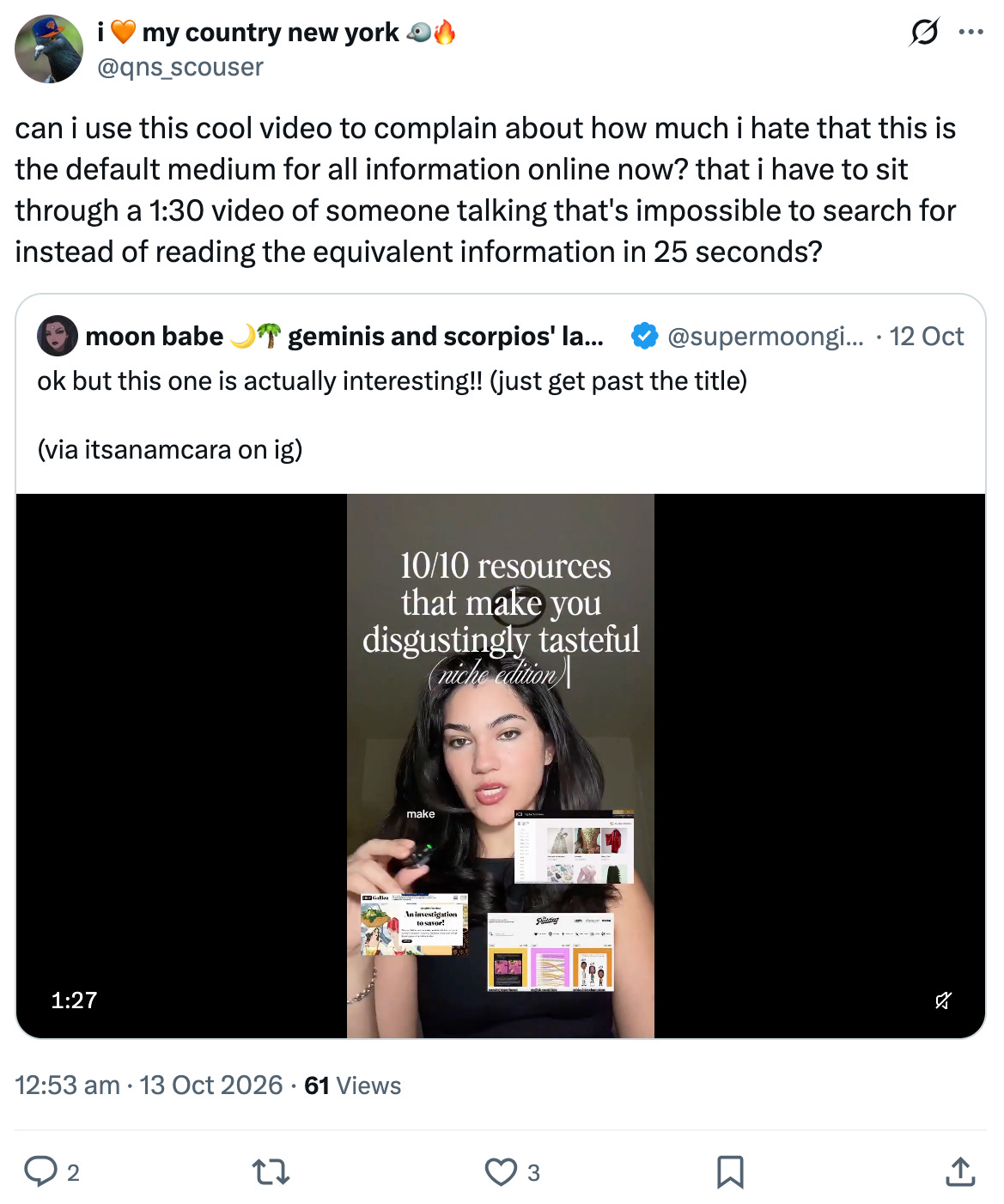
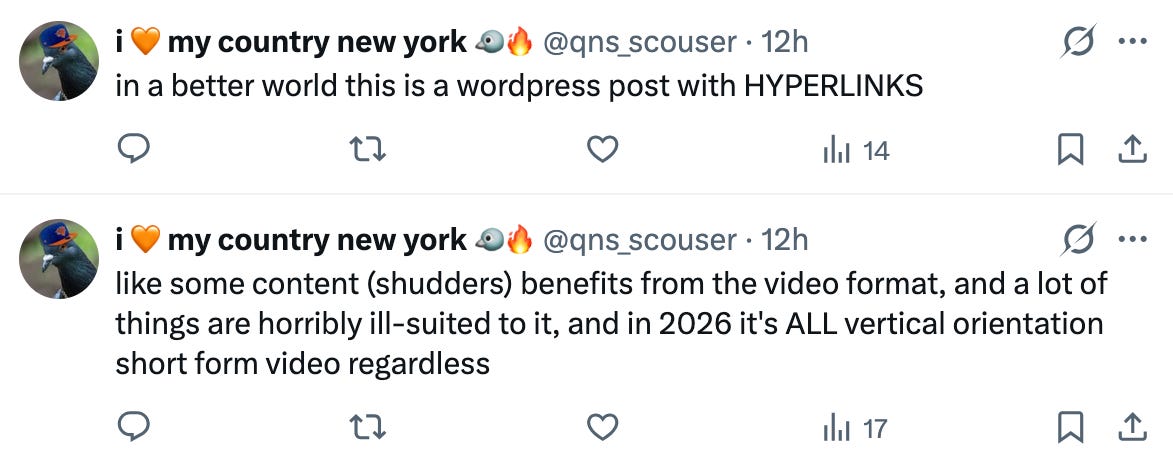
Taking the long route to what happened on Saturday. At Munyu, I saw a lot of young people at the show. I’m sure the fact that it was a public holiday was a not-insignificant factor. Another? How the place photographs. A thing I have noticed is something akin to speed-runs in art spaces: get to art space > photograph oneself with the art > photograph the art (optional) > rinse, repeat till the end of the show > leave. At some point, I found myself (as a dear friend named it afterwards) acting as a docent because I was explaining why the person I was talking to shouldn’t touch the work. I think I landed more as a cop (and, as we know, ACAB) because they soon went back to it when they couldn’t see me (see? I sound like a cop to myself!). It made me think of the kids at the museum who I’ve seen on similar speed runs with their teachers; barely interacting with the exhibits, let alone the exhibition texts.
These observations (“concerns” is a more accurate word for the state I was in haha) led to an expansive conversation with my aforementioned friend who called me a docent. She presented what I considered a tension between the youth and the space as an opportunity. What if they were welcomed into the space with some sort of guide on how to interact with the work, how to be considerate when interacting with others and the work, and so on? Would it make for a richer experience for everyone concerned? As we spoke, I realised there was a time before I knew the etiquette of being in such spaces and I received an education that informs how I now act (guides, signs, labels etc). Who is providing that education for young people today?
To bring it back to books, and reading more broadly, during that conversation I remembered how one of my friends recently taught me that it’s against the etiquette of the fan fiction world for one to write a review of fanfic. This was news to me but I can see someone entering those spaces and committing that faux pas.
We only know what we know and so much of what we know is down to the generosity of those who have come before us. I am trying to bring that generosity into the way I think of art (whichever way one defines it) and the communities around it. If only so that those of us who love art can move through the world more as docent than cop.
Quick news/ things that may be of interest:
This show, which I worked on behind the scenes, ends this month. There are also a number of activities planned till the very end so check out this page for details. See it if you can!
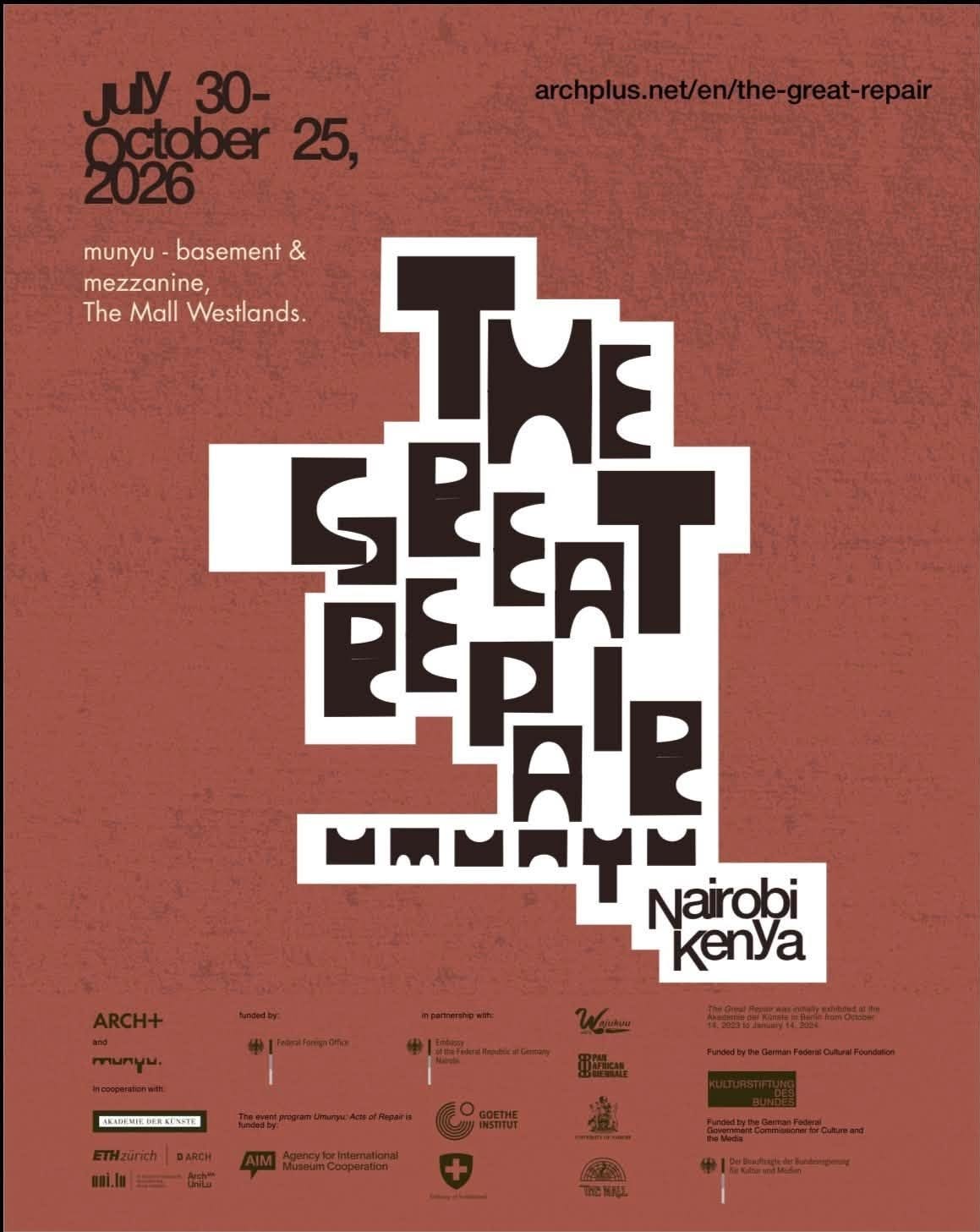
Go see this cool show!!!
Treat someone you like (me, for instance, I have a Switch) to the Tiny Bookshop Game (which is also on Discord)
Subscribe to my WhatsApp channel for texts I find while I spend time online
Film folks: Solidarity Cinema, for your consideration
If you’re in the Global North and would be open to engaging in the North-South solidarity that is sharing a library card, please email or message me so we can figure things out. Thank you!
The Queer Liberation Library 🏳️🌈🏳️⚧️, which is free to join here
Digital Library of Korean Literature, which is free to join here
Film folks: Check out the Japan Foundation’s JFF Theater online streaming platform
How to Write Alt Text and Image Descriptions for the visually impaired
Since Elon seems to want (some of) us gone, I’m trying to post more often on Bluesky. Follow me there if you’re on it!
You can send me books, postcards, letters, and assorted items via PO Box 102439, Jamia Posta 00101, Nairobi, Kenya (I write back!)
I have finished five books since I last wrote to you: The Disappearers by Marlon James (e-book and audiobook narrated by Brandon Miles, Michael Sean Harris, Solomon Peck, Andrew Clarke, Karl O’Brian Williams and Ano Okera), My Husband by Maud Ventura, translated from French (original title: Mon mari) by Emma Ramadan (audiobook narrated by Kiiri Sandy), Bullshit Jobs: A Theory by David Graeber (e-book and audiobook narrated by Christopher Ragland), Wild Geese by Soula Emmanuel (audiobook narrated by Clara Harte), and Kitchen by Banana Yoshimoto, translated from Japanese (original title: キッチン) by Megan Backus (e-book). I’m primarily using Storygraph now (passively updating Goodreads as I read most e-books on Kindle via the library).
I released a round up of books read in the week ending 8th October and other media earlier today. You can find it below:
As ever, please write back to me and tell me what books you’re reading or looking forward to reading — it’s always a great time talking about books.
Thank you for reading 🙂
If you want to support my work, you can:
Share an excerpt on social media, tap that ♡ button, & tell someone to subscribe
Send me a gift off my wishlist
Send opportunities my way. I can run your communications effort, do research, write reviews, craft copy, do cultural work (moderate, interview, make a podcast) and much more besides; just shoot me an email - 100onbooks@proton.me)
Send me job ads (communications, research, digital policy & arts positions especially)
Send me opportunities for art makers e.g. residencies, grants etc.
Forward this newsletter to a friend you think would enjoy it
send M-PESA or PayPal me a one-time gift at @cmutanyi
Have a lovely time reading. Talk to you soon!
RaMoMa mentioned! I went on a very lovely date there as a campus student. They eventually closed down, yeah?